Dental marketing best practices: what moves new-patient numbers
Where new patients actually come from, which channels to fix first, and how to tell whether your marketing is working.
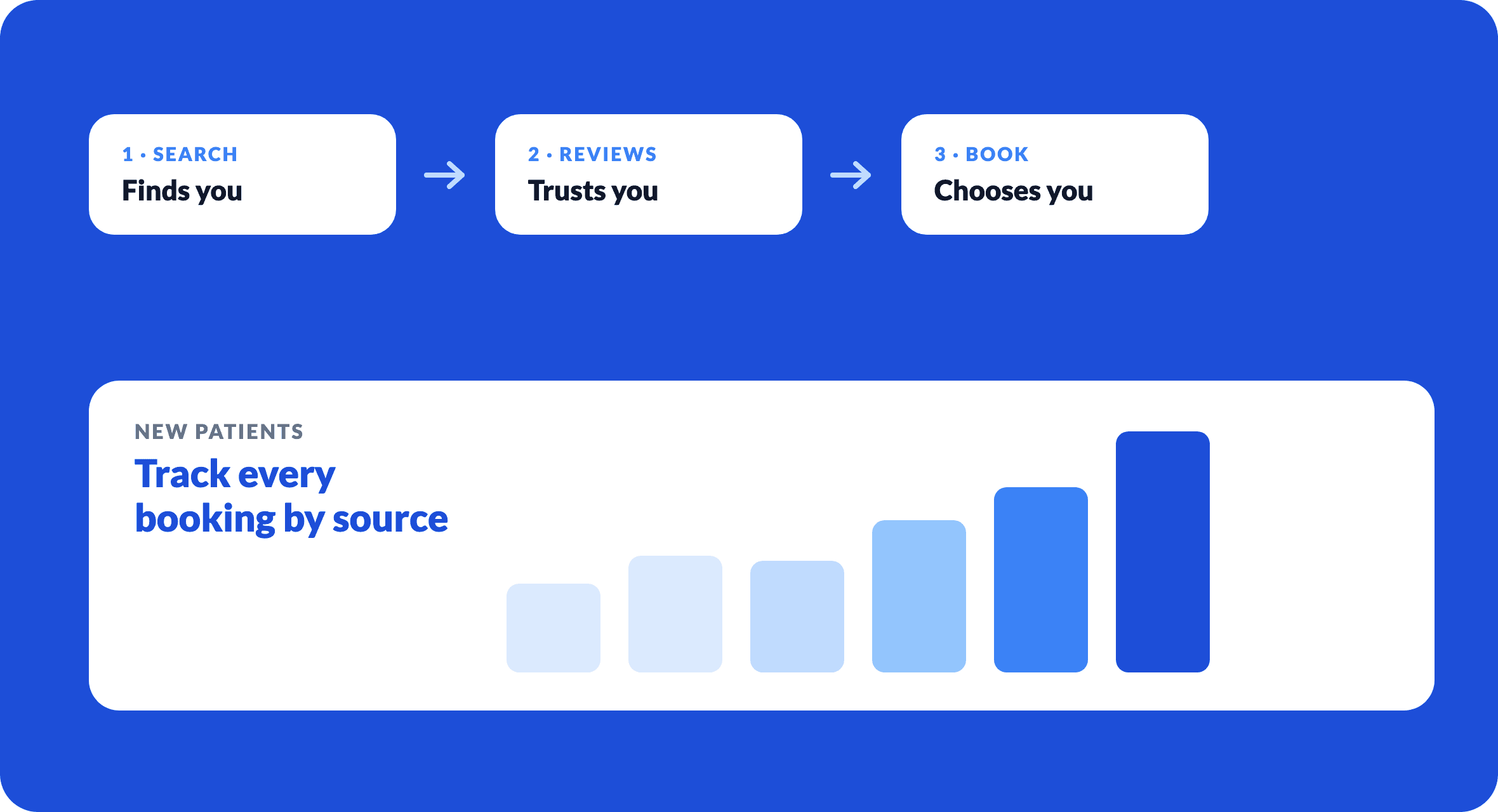
Start with the patient's path, not the channel
Most people choose a dentist in a short sequence: they search (Google, Maps or an AI assistant), skim reviews, look at the website to check insurance and location, then call or book. Marketing that ignores any step in that path leaks patients, no matter how much you spend at the top.
Before buying ads or posting more on social media, walk the path yourself on a phone: search for your service and town, open your listing, find your insurance, and try to book. Every point where you hesitate is a point where a patient leaves.
Fix the foundations first
- One accurate name, address and phone number everywhere: website, Google Business Profile, directories and the national provider registry (NPPES).
- A Google Business Profile with correct hours, categories, services, photos and a booking link.
- A fast mobile website that states clearly which insurance plans you accept, what you treat, and how to book.
- Online booking or a clearly staffed phone line, with after-hours capture (a form, chat or callback).
- A steady flow of genuine reviews and a habit of replying to them.
Spend where intent is highest
People searching for an emergency dentist, a specialist or a dentist that takes their plan are ready to book. Pages and profiles that answer those exact needs usually outperform broad awareness campaigns for a single practice.
Paid search can fill gaps while organic visibility grows, but it amplifies whatever the patient finds after the click. Fix the landing page and the booking step before raising budgets.
Measure what matters
Vanity numbers such as followers or impressions are only useful if they lead to booked visits.
- New-patient appointments booked and kept, by source (ask at booking and record it).
- Calls answered versus missed, including after hours.
- Where you appear in Google Maps for your main services, checked from several points in your area, not just from your office.
- Review count, average rating, and how quickly you reply.
- Cost per new patient for every paid channel.
A 90-day plan
- Weeks 1–2: audit your listings, website and phone handling; correct every inconsistency.
- Weeks 3–6: improve service and insurance pages; add online booking; start a review-request routine.
- Weeks 7–12: publish helpful content on your top services; test one paid channel with a fixed budget; review results monthly.
Run the free website check and practice record check to see where your practice stands today.
Open the free tools